The 3-Session Rule: How TokyLabs Designs Robotics Projects That Children Never Want to Stop
Most classroom activities last one lesson. Children are told what to build, follow the steps, and move on before they have time to wonder “what if?” At TokyLabs, we designed our programme around a different number entirely: three sessions. That single structural decision changes almost everything about what students take away from a robotics class.
Why Three Sessions?
Each TokyLabs robotics project — whether students are programming a sensor, building a moving vehicle, or tackling a real-world challenge — unfolds across three one-hour sessions. The first session is for exploring and failing productively. Students encounter the challenge, make their first attempts, and almost always hit a wall. The second session is where real learning happens: they regroup, adjust their approach, and discover what actually works. By the third session, they are refining, presenting, and proud.
Three sessions is not arbitrary. It maps onto the natural rhythm of how children (and adults) learn to solve problems they have never seen before. A single exposure to a new challenge is almost never enough to build lasting understanding. The second attempt — informed by what went wrong the first time — is where the brain starts to encode the lesson. The third is where it sticks.
The Flexible Entry Point
One underappreciated benefit of this structure is that it makes every project a natural on-ramp. Because each project starts fresh, a new student who joins the group in week four misses nothing. There is no “you should have been here at the beginning.” Every child can jump in at any time and belong fully from the first session of the next project. For after-school programmes and robotics clubs, where attendance fluctuates, this is not a minor convenience — it is the design feature that makes genuine inclusion possible.
The 70/30 Balance
Underlying each project is what TokyLabs calls the 70/30 curriculum: 70% of session time goes to soft skills — creativity, critical thinking, problem-solving, communication, and hands-on making — while only 30% goes to electronics and programming. This does not make robotics less technical; it makes the technical components meaningful. A child who understands why they are programming a sensor — because they identified the problem themselves — learns faster, retains more, and grows more confident than one who follows a step-by-step instruction sheet.
For parents, the practical takeaway is this: look for programmes that give children enough time to get stuck, think, and try again. One-off workshops can spark interest, but it is the sustained, structured challenge across multiple sessions that builds the skills that transfer beyond the classroom.
Bringing This to Your School
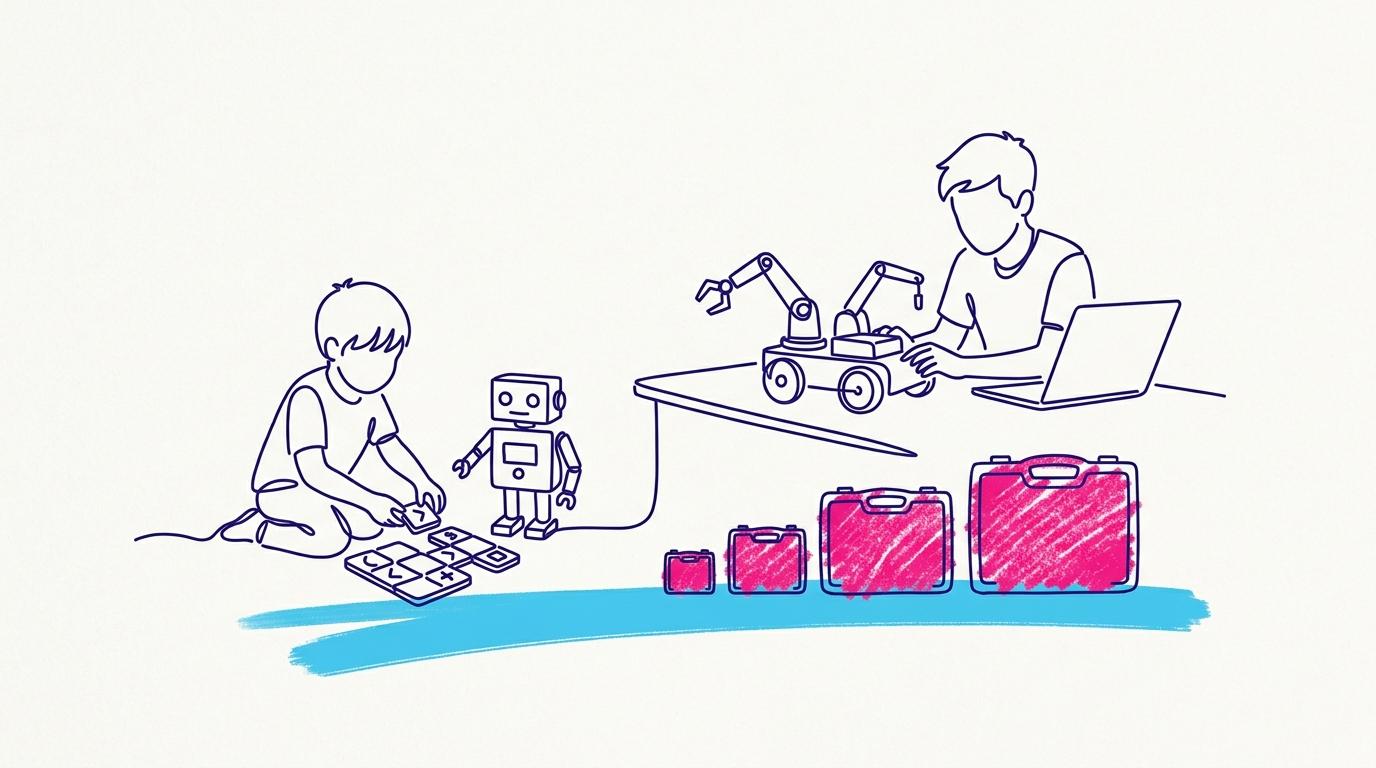
At TokyLabs, the three-session architecture is built into every programme we deliver — from Tokymini sessions for primary school students to Tokymaker-based projects for secondary learners. Our after-school educators do not hand students a finished design; they pose the challenge and guide the thinking. If you are a teacher or school administrator in Bali wondering how to bring a genuinely effective robotics programme to your campus, we would love to walk you through how our model works in a real classroom. Visit tokylabs.com and let’s start a conversation.
Make Your Business Online By The Best No—Code & No—Plugin Solution In The Market.
30 Day Money-Back Guarantee
Say goodbye to your low online sales rate!