When Creativity Meets Responsibility: How Upcycling Projects Turn Kids Into Thoughtful Makers
What if the most powerful STEM lesson of the year started with a pile of bottle caps, bubble wrap, and plastic scraps that would otherwise end up in a landfill? For children, the act of seeing value in discarded materials — and turning them into something real — is not just a craft activity. It is a profound shift in how they see the world.
The Hidden Curriculum Inside Every Waste Bin
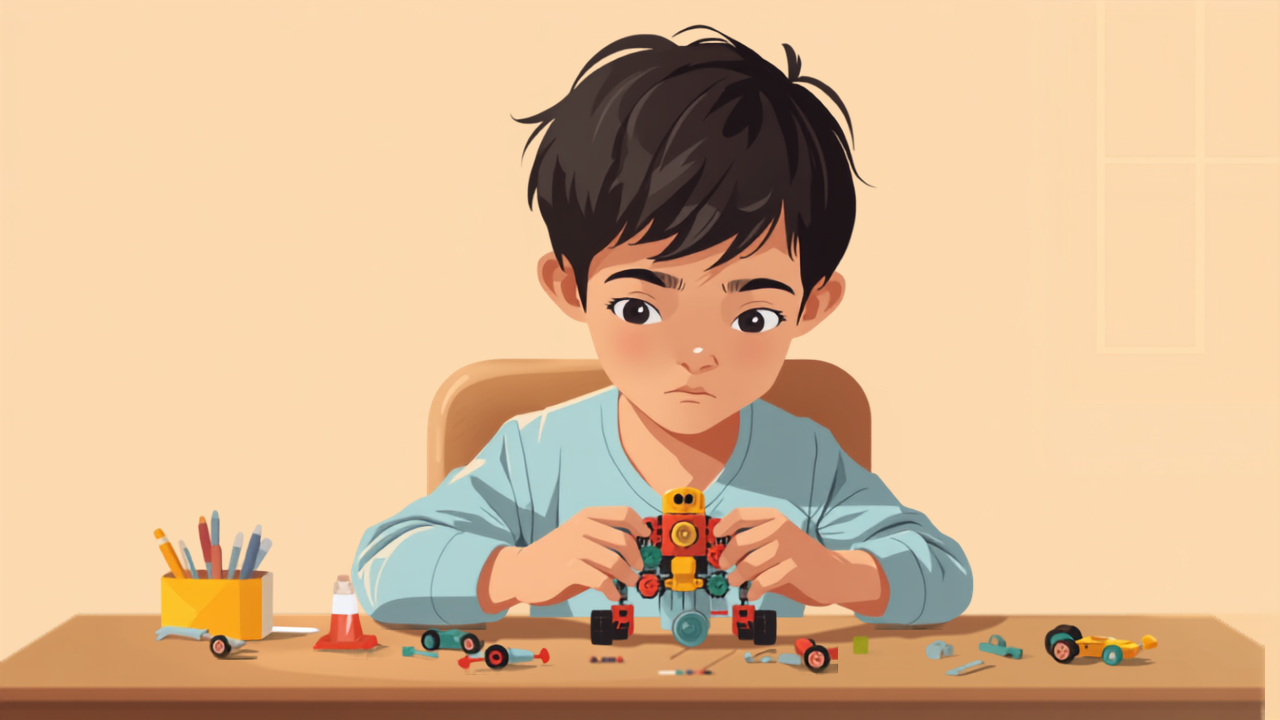
Sustainability education is often taught as a set of rules: recycle this, reduce that. But when children physically collect materials, sort them by type and texture, and experiment with transforming them into new creations, something deeper happens. They stop being recipients of information and become designers of solutions. This is the heart of what educational researchers call maker-based learning — the idea that children learn best when they build, test, and reflect on real objects they have created with their own hands.
Projects inspired by initiatives like Precious Plastic, which reimagines plastic waste as a raw material for new designs, give children a tangible entry point into systems thinking. When a child holds a sheet of plastic they have melted and pressed into a new shape, they understand material transformation in a way no textbook diagram can replicate. They also begin to ask a different kind of question: not "what should I throw away?" but "what could this become?"
Why This Matters for Creative Confidence
Creativity is one of the skills most consistently identified by educators and employers as essential for the future — and it is also one of the hardest to teach through traditional instruction. You cannot build creative confidence by watching. You build it by trying, failing, adjusting, and trying again.
Upcycling and makerspace projects create exactly this environment. There is no single correct answer, no template to follow. A child who spends an afternoon figuring out how to construct a small container from recycled materials has practised problem-solving, spatial reasoning, material science, and iterative design — all without a worksheet in sight. More importantly, they finish the session knowing they made something that did not exist before. That feeling of authorship is what builds the kind of confidence that carries forward into every challenge they face.
For teachers and parents looking to introduce this at home or in the classroom, the barrier to entry is remarkably low. A collection of clean plastic packaging, some basic tools, and an open-ended brief — "make something useful from what you see here" — is all it takes to spark an afternoon of genuine creative exploration. Resist the urge to show them how. Give them the materials and the time, and then watch.
How TokyLabs Brings This to Life
At TokyLabs, the makerspace philosophy is woven into everything we do. Our spaces are designed to put materials, curiosity, and a spirit of experimentation at the centre of every session. Whether students are working with Tokymaker electronics kits, screenless Tokymini robotics for younger learners, or exploring sustainability projects at our Bali makerspace, the goal is always the same: give children the experience of being makers — people who look at the world and see not just what is, but what could be. Because the children who learn to think that way today are the designers, engineers, and innovators who will shape tomorrow.
Make Your Business Online By The Best No—Code & No—Plugin Solution In The Market.
30 Day Money-Back Guarantee
Say goodbye to your low online sales rate!