What Happens to a Child's Brain When They Build a Robot — And Why It Matters More Than You Think
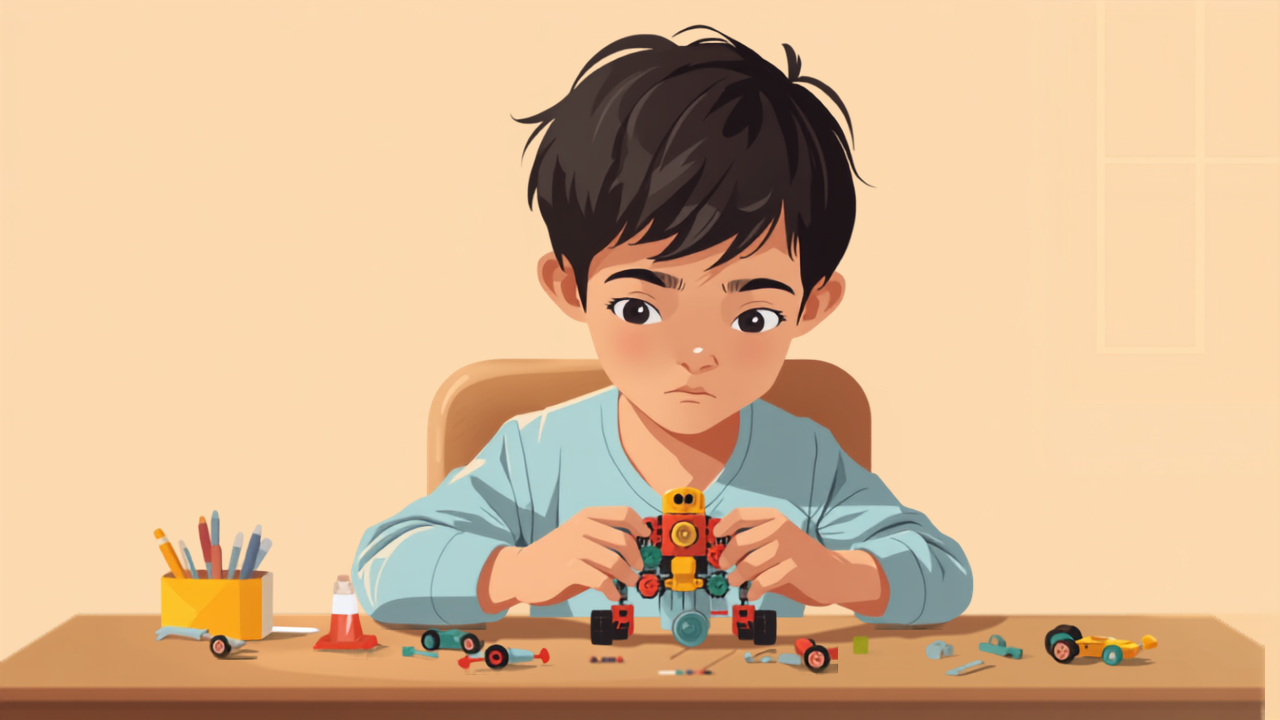
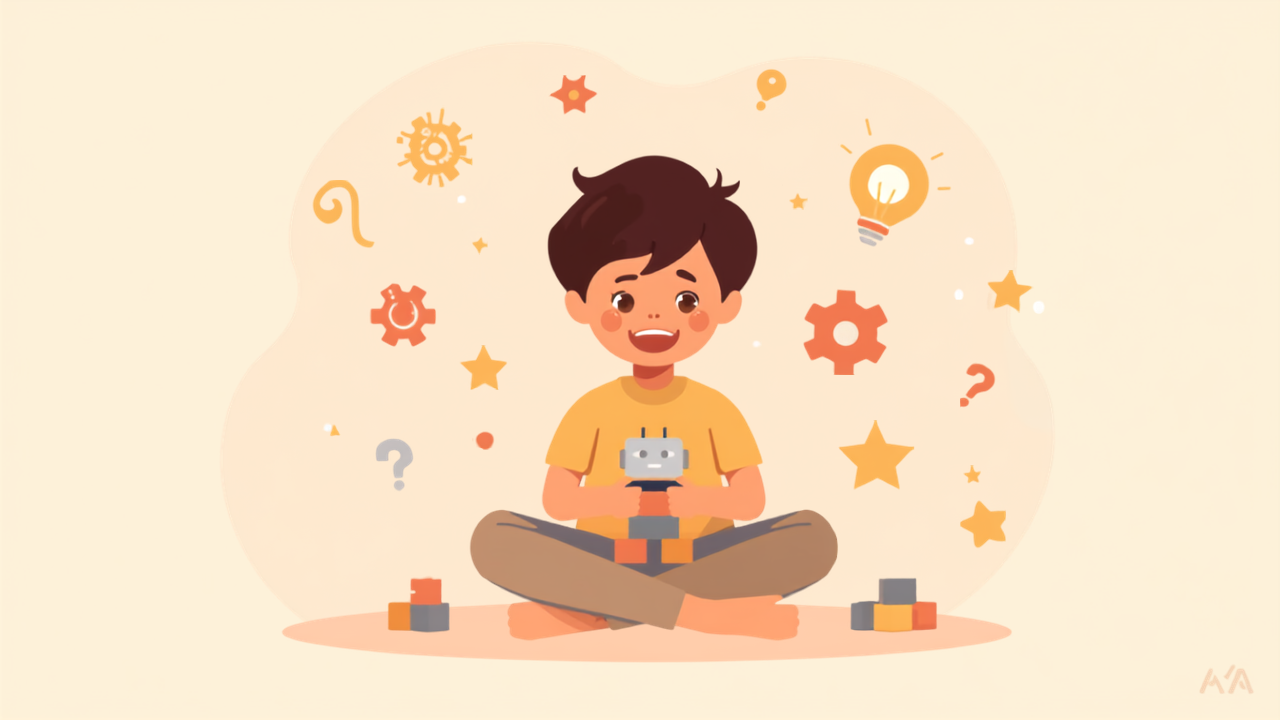
Most parents want their child to love learning. Very few expect the answer to be a pile of wires, plastic parts, and a motor that keeps spinning the wrong way. Yet the moment a child picks up those pieces and starts figuring out why it doesn't work — that is precisely when something remarkable happens in their brain. Hands-on building doesn't just teach children about robots. It rewires the way they think about every challenge they will face in life.
The Science of Building: What Happens When Kids Make Things
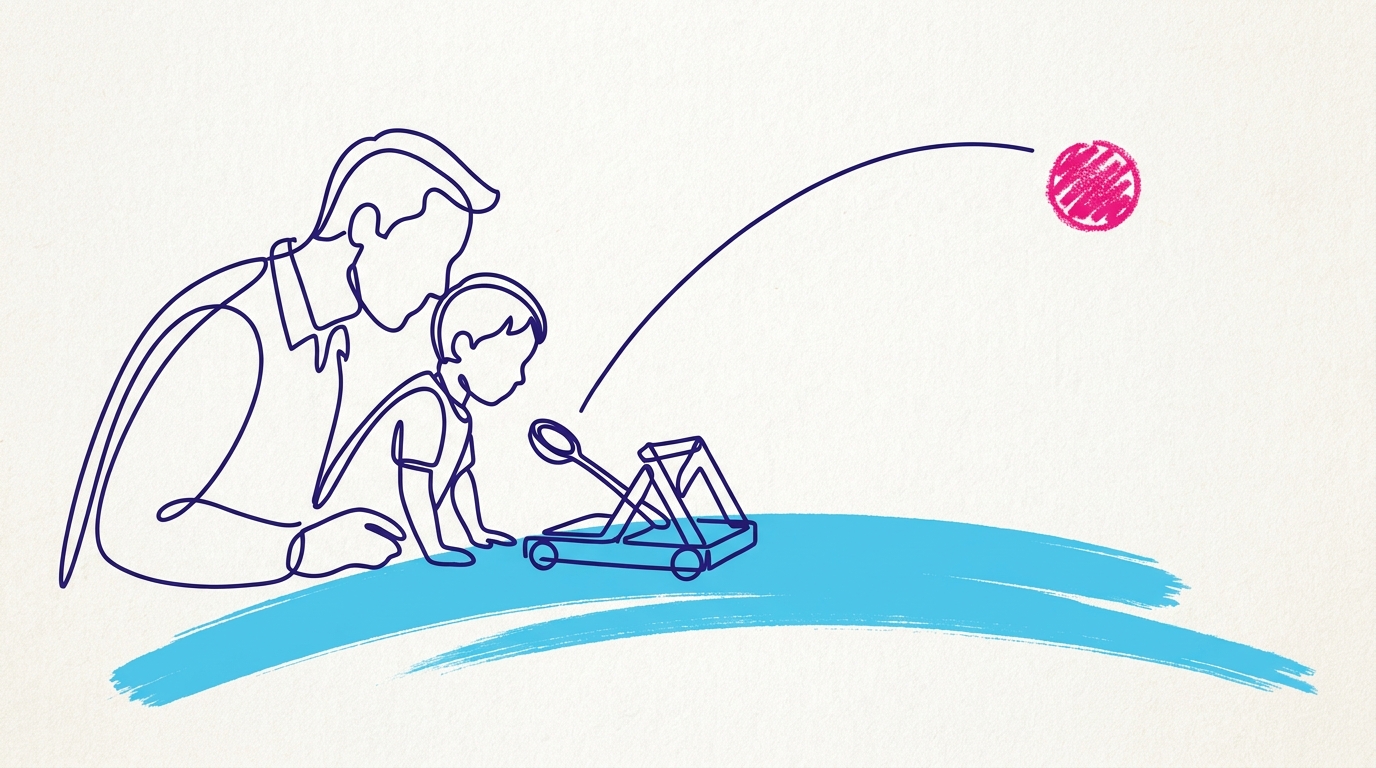
When a child builds something physical — a robot, a moving vehicle, a simple circuit — their brain engages in a fundamentally different way than when they watch a screen or listen to a teacher explain a concept. Several cognitive systems activate at once: spatial reasoning as they visualise how parts fit together, working memory as they hold the overall goal in mind while managing each step, and the executive function skills needed to plan, adjust, and persevere. Neuroscientists call this embodied cognition — the idea that the body and the hands are not separate from thinking, but an integral part of it.
What makes this especially significant for young learners is that these neural pathways form most rapidly in childhood. A seven-year-old who spends time tinkering, building, and problem-solving is not just having fun — they are literally building a more adaptable, resilient brain. Research from MIT's Media Lab has consistently shown that children who engage in constructivist learning (making things, not just consuming information) demonstrate stronger creative problem-solving and deeper conceptual understanding across all subjects, not just STEM.
Why Screenless Matters for Primary School Children
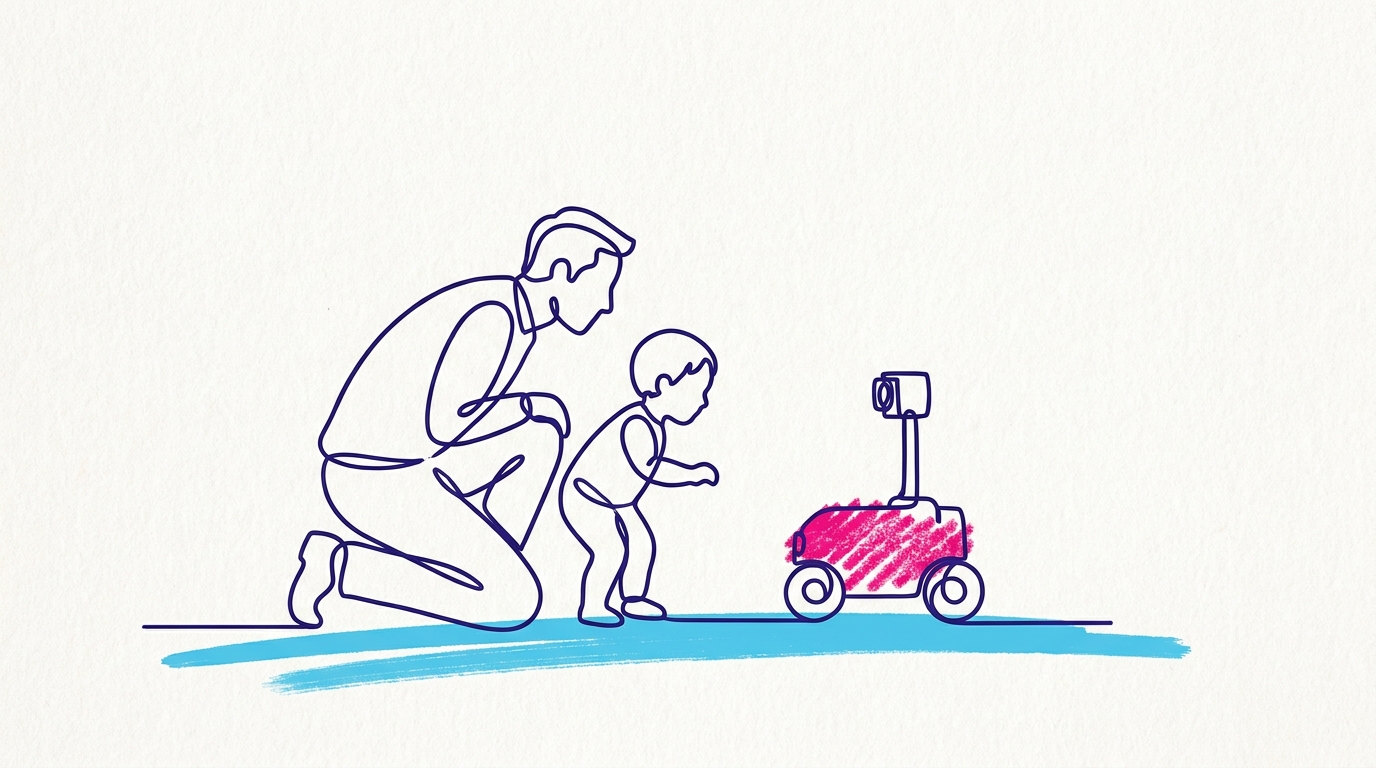
There is a subtle but crucial distinction between working with a physical robot and working on a screen-based simulation. When children interact with something tangible, the feedback loop is immediate and physical: the motor spins, the wheel turns, the robot moves — or doesn't. There's no loading screen, no tutorial pop-up, no undo button. This friction is the point. Children learn to observe carefully, to form hypotheses, to test and revise. These are the habits of a scientist and an engineer, developed naturally through play.
Screen-based tools, for all their benefits, often remove this productive friction. Children are guided through steps, given instant visual rewards, and shielded from genuine failure. Screenless robotics inverts this. The challenge is real, the stakes are low, and the learning is deep. For primary school children especially — whose fine motor development, spatial awareness, and attention systems are still maturing — working with physical components offers something a tablet simply cannot.
Practical Tips for Teachers and Parents
- Resist the urge to fix it for them. When a child's robot moves in the wrong direction, that confusion is the learning moment. Ask: "What do you think is happening? What could we change?" rather than adjusting the component yourself.
- Celebrate the broken attempt. Reframe failure explicitly: "Look at all the things we found out that don't work! That's how engineers get to what does." Children who see mistakes as data become bolder experimenters.
- Keep it open-ended. Avoid challenges with a single correct answer. "Make your robot stop before the edge of the table" has dozens of solutions — all of them valid, all of them educational.
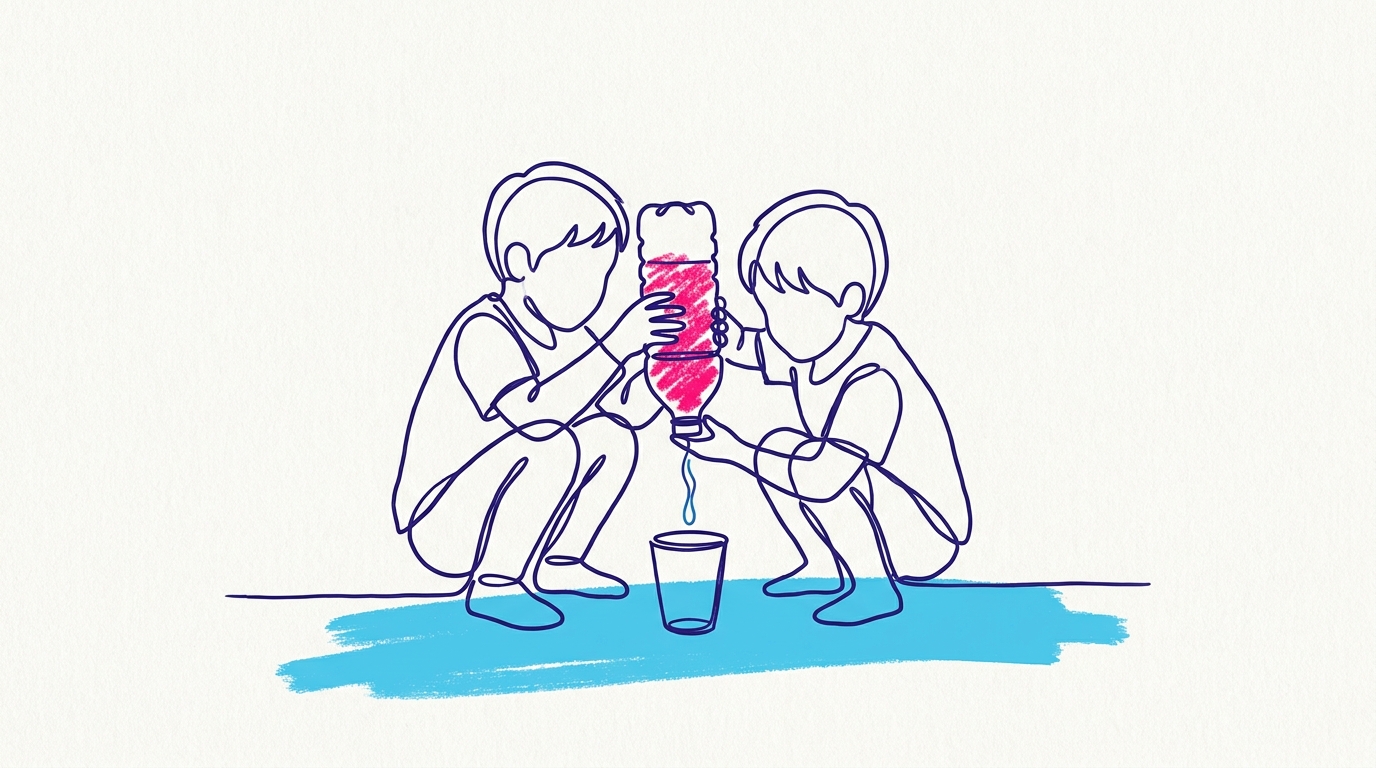
- Notice the conversation. When children build together, they negotiate, explain, argue, and teach each other. The social learning happening around the robot is as valuable as the technical learning within it.
How TokyLabs Brings This to Life
At TokyLabs, the philosophy of learning-through-building sits at the heart of every product we create. Our Tokymini kits are designed specifically for primary school children — screenless, tactile robotics that put small hands in charge of real mechanisms. There are no step-by-step instructions to follow and no single right answer to reach. Children explore, get stuck, try something different, and eventually make something that works — and in doing so, they build far more than a robot. They build confidence, curiosity, and the kind of creative resilience that will serve them in every classroom and career ahead. If you're a teacher or parent looking for a way to bring this kind of learning into your world, we'd love to show you what's possible.
Make Your Business Online By The Best No—Code & No—Plugin Solution In The Market.
30 Day Money-Back Guarantee
Say goodbye to your low online sales rate!