
Build a Mini Catapult with Your Kids: The STEM Project That Makes Physics Click
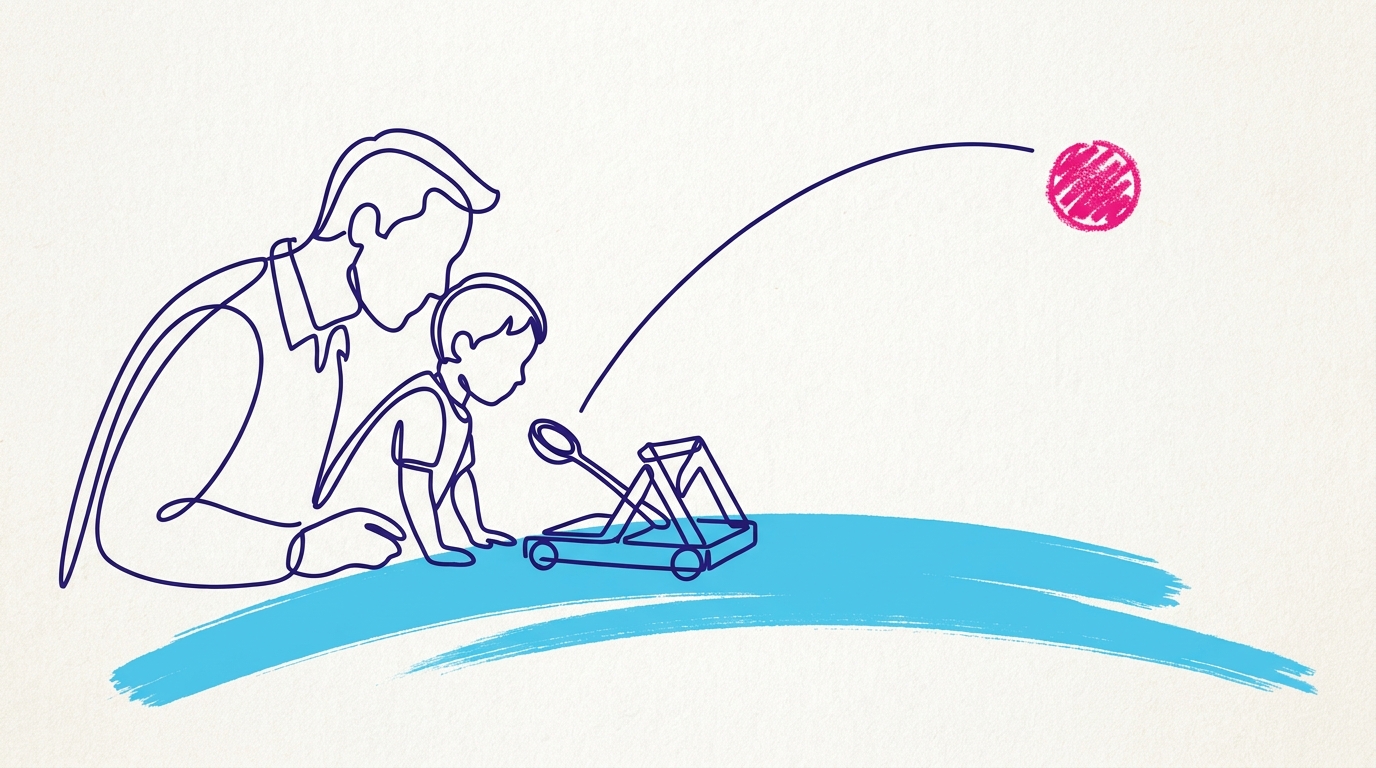
What if the best physics lesson your child ever gets does not happen in a classroom—but at your kitchen table, with cardboard, tape, and a spoon? Building a mini catapult together takes under an hour, costs almost nothing, and opens a door to real engineering thinking. Here is why this weekend project deserves a spot in every family's playbook.
The Science Hidden in Every Launch
A catapult is one of the oldest machines in human history—and one of the best teachers. When children design a lever arm, adjust the fulcrum position, and test how far a soft ball flies, they are experiencing Newton's laws in a way no textbook can replicate. Force, trajectory, stored energy, and mechanical advantage all show up naturally as kids tinker. The moment they move the pivot point and watch the projectile sail further, the concept of leverage becomes unforgettable.
This kind of discovery—where the child sees cause and effect directly—builds genuine scientific intuition. They are not memorizing formulas; they are feeling physics.
The Real Lesson: What Happens When It Does Not Work
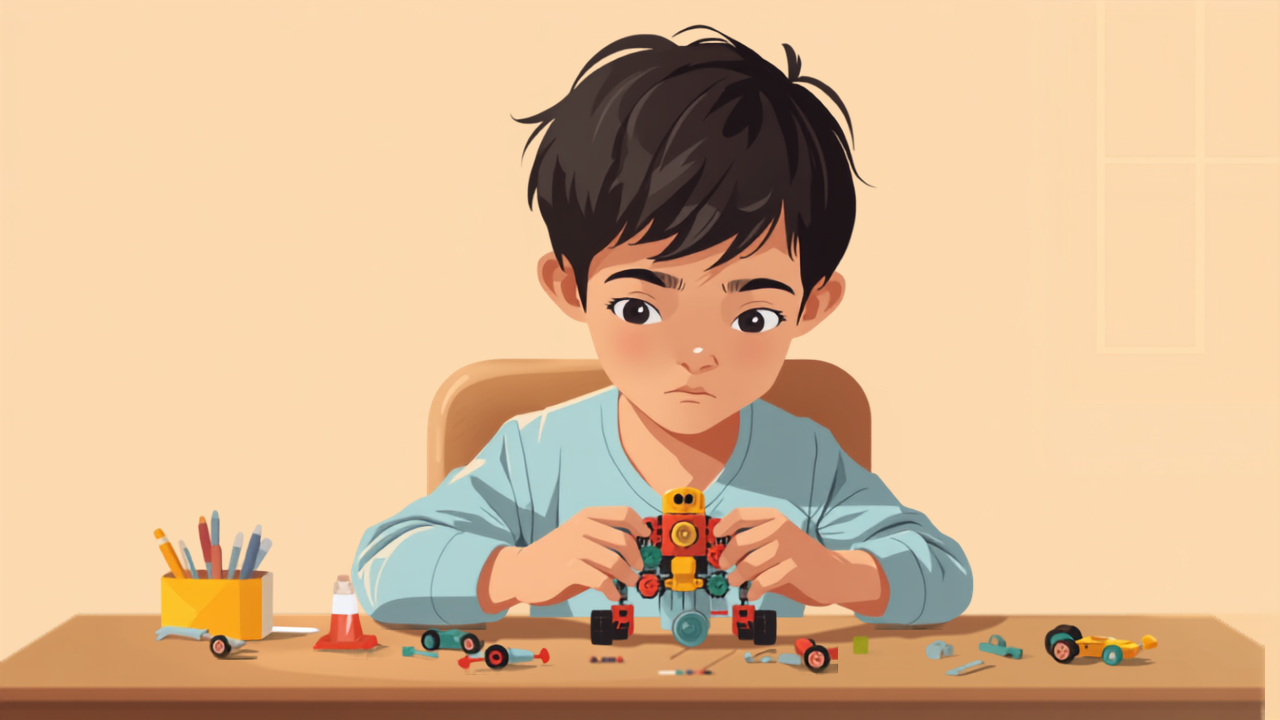
The most valuable moment in any build-at-home project is not when something goes right—it is when something goes wrong. When the arm snaps or the ball barely rolls off the edge, children face a real engineering problem. Do they give up, or do they ask why? That try-fail-adjust loop is the same process real engineers use every day. It builds resilience, creative problem-solving, and the confidence to try again.
As a parent or teacher, the most powerful thing you can do is resist the urge to fix it for them. Ask guiding questions instead: "What would happen if the arm were longer?" or "How could we make the base heavier so it does not tip?" Let the thinking—and the triumph—belong to the child.
How to Get Started at Home
You only need a few household items: cardboard, a wooden ruler or craft sticks, a plastic spoon, tape, and something soft to launch—like a rolled paper ball or a marshmallow. Set a simple challenge: who can launch the ball the furthest? Then watch curiosity take over. Add constraints as they get comfortable—can they hit a target? Can they launch without the base tipping? Each new constraint introduces a fresh layer of problem-solving.
Bringing the Spirit Into the Classroom
At TokyLabs, this project-first philosophy sits at the heart of everything we do. Our after-school educators do not hand students a step-by-step instruction sheet—they pose a challenge and guide children to find their own path. Whether it is building a catapult, exploring circuits, or coding a robot, the goal is always the same: make learning feel like play, and watch real skills take root. If you would like to bring this kind of hands-on STEM experience to your international school in Bali, we would love to connect.
Make Your Business Online By The Best No—Code & No—Plugin Solution In The Market.
30 Day Money-Back Guarantee
Say goodbye to your low online sales rate!