Why Screenless Robotics Is the Best First Step for Young Learners
What if the most powerful technology you could put in a young child’s hands has no screen at all? At a time when parents and teachers are worried about too much screen time, a quiet revolution is happening in primary school classrooms — and it starts with a small, colorful robot and a whole lot of curiosity.
Learning to Think Before Learning to Code
Young children — especially those in primary school between the ages of 5 and 10 — are not yet developmentally ready to stare at lines of code. But they are ready to ask: “What happens if I press this? What if I change that?” Screenless robotics gives them exactly that space. Instead of tapping on a glass surface, children physically interact with the robot: pressing buttons, setting sequences, watching it move, and adjusting when it doesn’t do what they expected. Every failed attempt is a micro-lesson in logic and resilience — two skills that will serve them far beyond the classroom.
Research in early childhood education consistently shows that hands-on, tangible learning produces deeper understanding than screen-mediated instruction for young learners. When a child can hold the thing they are programming, the feedback loop between thought and result is immediate and visceral. They don’t need an adult to translate the concept — the robot does it for them.
What Teachers and Parents Are Discovering
Teachers who bring screenless robotics into their classrooms often report something unexpected: the children who struggle most with traditional academics light up. A child who finds reading difficult but who figures out the robot’s path before any of her classmates? That child is discovering competence. And competence, once felt, is contagious — it spreads into other subjects, other challenges, other days.
For parents, screenless robotics is a rare gift: technology time that doesn’t feel like screen time. Families are building confidence in their children with activities that look and feel like play — because the best learning often does. Encouraging your child to set up a robot challenge at home, even just getting it from point A to point B without hitting a chair leg, is a perfect weekend activity that sneaks in spatial reasoning, sequencing, and patience.
TokyLabs and the Joy of Tangible Discovery
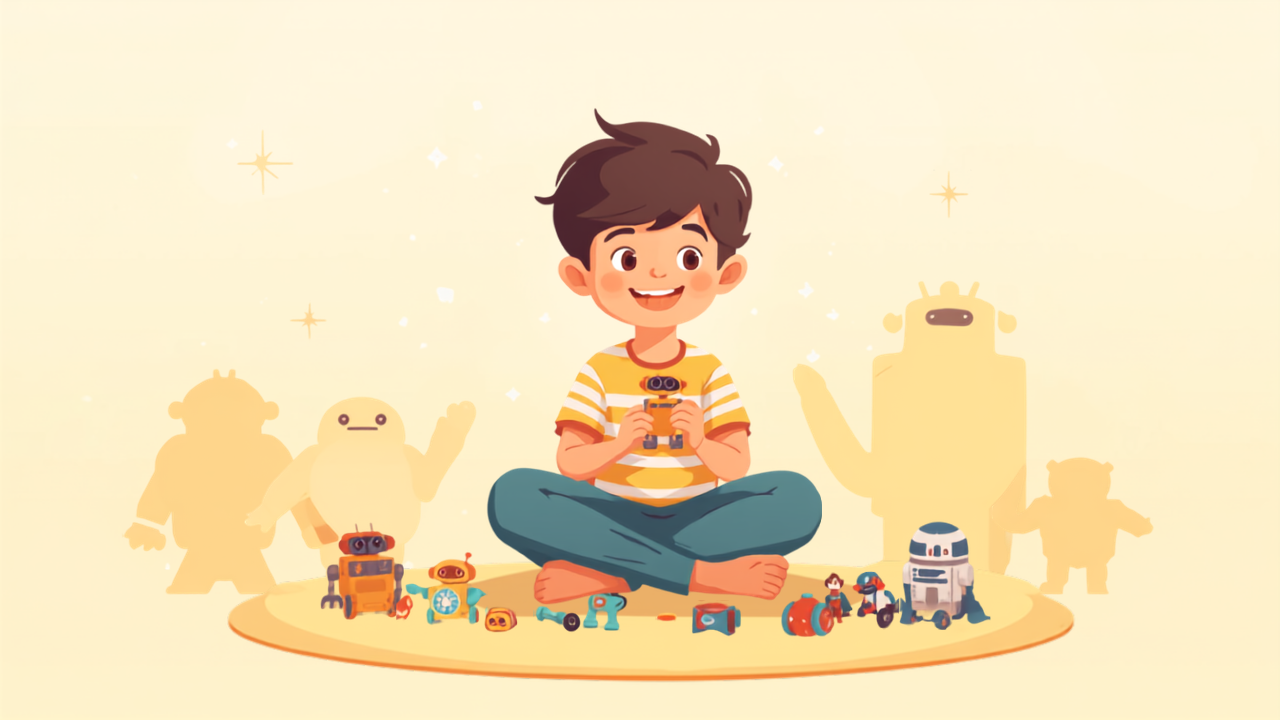
At TokyLabs, the belief that joy is the most powerful learning tool drives everything we build. Our Tokymini kit was designed with exactly this in mind: a screenless robotics experience for primary school children that invites exploration without the need for a single tap on a phone or tablet. Schools across Bali and beyond — including new partner schools in Jakarta — are bringing Tokymini into their classrooms, and the excitement from both students and educators has been extraordinary. When a six-year-old figures out how to make a robot complete a loop on their own terms, something shifts. They don’t just understand robotics. They understand that they can figure things out — and that is the most important lesson of all.
Make Your Business Online By The Best No—Code & No—Plugin Solution In The Market.
30 Day Money-Back Guarantee
Say goodbye to your low online sales rate!